Safe Fresh Herbs for Pet Birds: Basil, Cilantro, Mint & Portions
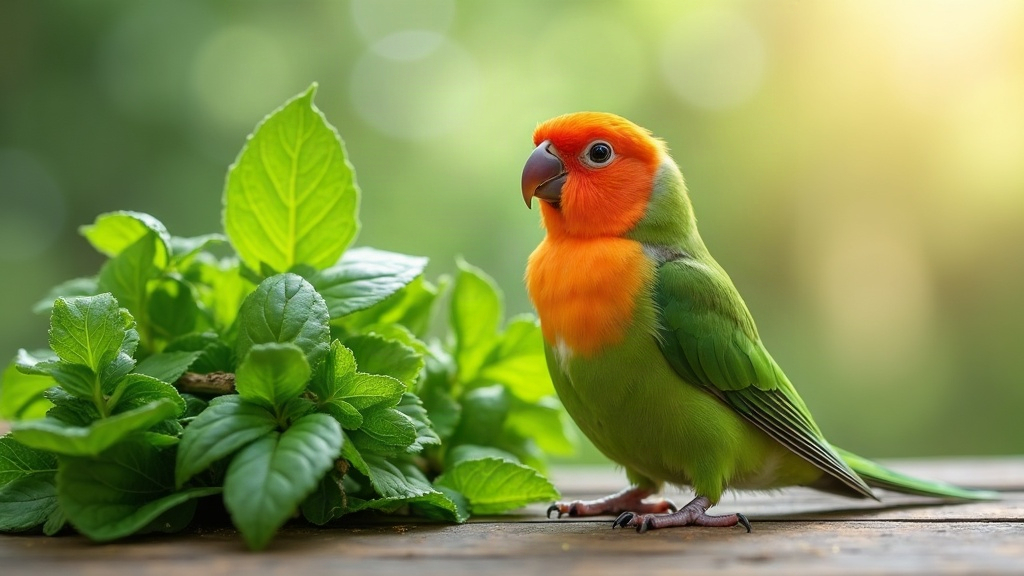
Fresh herbs like basil, cilantro, and mint are safe and nutritious additions to most pet birds’ diets, as long as you offer them in moderation, wash them well, and bring them in slowly. These herbs bring antioxidants, vitamins, and some natural variety that makes foraging a lot more fun for your bird. But here’s the thing: portion control and proper prep matter just as much as which herb you pick.
Why Fresh Herbs Matter for Pet Birds
In the wild, parrots and other companion birds don’t stick to one food source. They forage across dozens of plants, seeds, and greenery types in a single day. A diet of pellets or seed mix alone can leave a bird understimulated, not just physically but mentally too. Fresh herbs bring back some of that natural variety. They offer:
- Antioxidants that support immune function
- Vitamins A, C, and K for skin, feather, and bone health
- Low-calorie bulk that adds satiety without piling on fat or sugar
- Enrichment value, since shredding and nibbling leaves taps into natural foraging instincts
Herbs shouldn’t ever replace a bird’s core diet of formulated pellets. Think of them as a rotating side dish, or something to stuff into a foraging toy.
Basil: A Gentle, Aromatic Favorite
Basil might be the single most bird-safe herb out there. Its mild flavor and soft leaf texture make it easy to eat for just about any bird, from a tiny budgie to a full-sized macaw.
Benefits:
- Contains vitamin K, which supports blood clotting and bone metabolism
- Mild antibacterial properties thanks to essential oils like eugenol
- Lower oxalate content than many other leafy greens
Portion guidance: For small birds (budgies, cockatiels), 1-2 small leaves, two or three times a week, is plenty. Larger parrots like African greys or macaws can handle a small sprig, around 3-4 leaves, at the same frequency.
Cilantro: Nutrient-Dense but Polarizing
Cilantro (coriander leaf) is safe and genuinely good for birds, though some of them will refuse to touch it. That’s not stubbornness, by the way. It’s a documented genetic taste sensitivity, the same one that makes some people think cilantro tastes like soap.
Benefits:
- High in vitamin A and vitamin K
- Contains folate, which supports cell growth and energy metabolism
- Mild natural diuretic properties, useful in small doses
Portion guidance: A few sprigs, stems and leaves both, chopped into a foraging dish once or twice a week is plenty. Cilantro is nutrient-dense rather than filling, so there’s no reason to go overboard. Overfeeding won’t boost the benefits, and in sensitive species like conures it can actually cause loose droppings.
Mint: Use Sparingly
Mint (spearmint or peppermint) is safe, but it’s best treated as an occasional treat rather than a regular menu item. The aromatic oils are strong, and a little goes a long way.
Benefits:
- Can help with digestion in small amounts
- The refreshing scent may ease stress during cage cleaning or travel
- Contains manganese and vitamin A
Portion guidance: One small leaf, torn into a few pieces, once a week, is enough for small to medium birds. Skip peppermint oil or any concentrated mint product entirely. Those are far too strong and can irritate a bird’s respiratory system or digestive tract.
General Rules for Feeding Herbs to Birds
- Always wash thoroughly, even organic herbs, to remove pesticide residue. Trace soil bacteria can cause problems too, not just chemicals.
- Introduce one herb at a time, then wait 2-3 days before trying a new one. This way, if there’s an allergic reaction or digestive upset, you’ll know exactly what caused it.
- Skip grocery-store herb bundles held together with rubber bands or plastic ties. These can carry chemical residue you don’t want near your bird.
- Grow your own if you can. A small windowsill herb garden with basil, cilantro, and mint gives you full control over pesticide exposure, and the leaves will be fresher and more nutrient-packed than anything from a store.
- Clear out uneaten herbs within a few hours, especially if it’s warm in the room, since mold can set in fast.
Herbs to Avoid
Basil, cilantro, and mint are safe bets, but not every herb belongs in a bird’s bowl. Steer clear of:
- Parsley in large quantities. Small amounts are fine, but some studies have linked excessive intake to kidney strain.
- Chives and other allium-family herbs. These are toxic to birds, full stop.
- Oregano in concentrated oil form. A tiny bit of whole leaf is usually okay, but the oils are far too potent.
Conclusion
Basil, cilantro, and mint can be genuinely good for a pet bird’s diet, as long as you keep portions small and consistent, a few leaves, a couple of times a week is about right. They’re meant to supplement a balanced pelleted diet, never replace it, and they should always be washed and introduced one at a time. Get the approach right, and fresh herbs can turn an ordinary mealtime into something your feathered companion actually looks forward to.