How to Bird-Proof a Home Office for a Free-Flying Conure
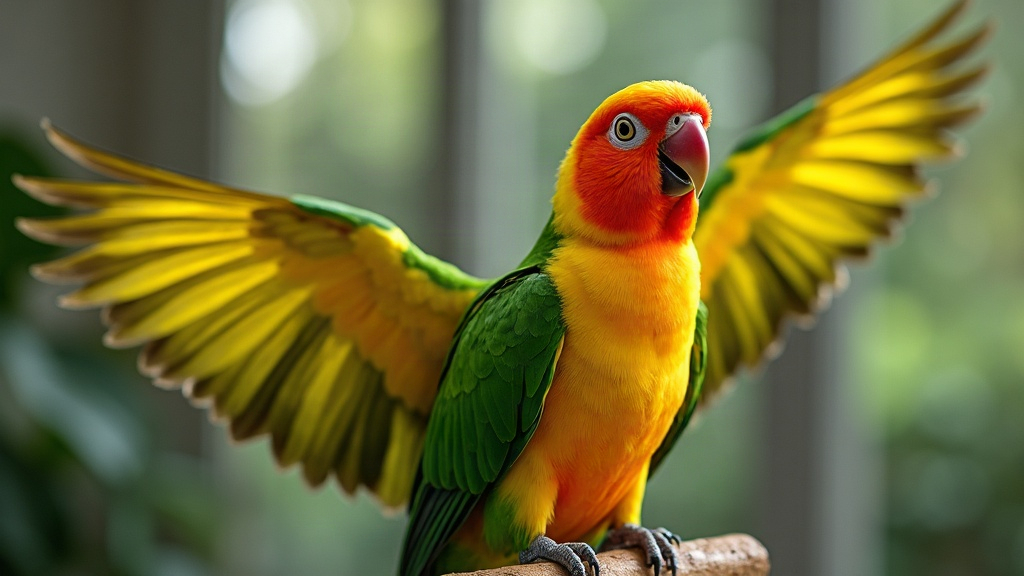
Letting your conure fly free in your home office sounds like a dream for both of you. More exercise, more bonding, more mental stimulation for a bird that’s built to move. But a standard office is packed with hidden dangers, from exposed cables to toxic houseplants sitting innocently on a shelf. This guide walks you through exactly how to turn a workspace into a safe, conure-ready flight zone without sacrificing your productivity.
Why Home Offices Are Riskier Than You Think
Conures are curious, fast, and they love to chew almost anything within reach. A home office combines three things birds find irresistible: small moving objects, interesting textures, and elevated perching spots, often placed right next to real hazards.
Common office-specific risks include:
- Power cords and chargers - chewing through a live wire can cause electrocution or even start a fire.
- Open windows and mirrors - a conure can fly into glass at full speed, risking head trauma or worse.
- Candles, wax warmers, and essential oil diffusers - fumes and heat are dangerous for a bird’s sensitive respiratory system.
- Small objects like paper clips, pushpins, and rubber bands - choking or ingestion hazards that look like toys to a curious beak.
- Ceiling fans - even a motionless fan can be chewed on; a spinning one is often fatal.
Step 1: Secure Every Cord and Cable
Start with the biggest hazard first. Conures are notorious cord-chewers, and a single bitten charger cable can end badly.
- Use cord covers or cable sleeves (PVC-free, bird-safe options are best) on every visible cable.
- Route cords behind furniture or through cord channels mounted to the wall or desk legs.
- Unplug chargers and peripherals you’re not actively using. If it’s not plugged in, it can’t shock anyone.
- Consider a cable management box to hide power strips completely, out of sight and out of beak range.
Step 2: Protect Windows, Mirrors, and Reflective Surfaces
Collisions with glass are one of the most common free-flight injuries, and they happen faster than you’d think, sometimes in under two seconds from takeoff.
- Apply static window clings, UV decals, or frosted film to break up reflections.
- Keep blinds or sheer curtains partially closed during flight time.
- Cover or remove standing mirrors, or angle them so they don’t reflect an open flight path.
Step 3: Remove or Relocate Toxic Items
Audit your desk and shelves for anything that could poison your bird. It only takes one bad afternoon.
- Non-stick coated items (some space heaters, certain lamps) release PTFE fumes that are lethal to birds when overheated. Avoid these entirely, no exceptions.
- Essential oil diffusers, scented candles, and air fresheners should be removed from the room, not just turned off.
- Houseplants like pothos, dieffenbachia, and philodendron are toxic. Swap them for bird-safe plants such as spider plants or areca palms, or just skip the greenery for now.
Step 4: Rethink Your Furniture Layout
- Cover bookshelves with closed doors, or clear loose papers and small items out of reach.
- Push furniture away from windows so your conure can’t launch directly into glass mid-flight.
- Add a few safe landing spots, a playstand, a perch near your desk, or a small corner tree, so your bird has appealing alternatives to your keyboard or monitor.
Step 5: Manage the Desk Itself
Your workspace is often the most tempting (and dangerous) perch of all. Birds gravitate toward exactly the spot you’re working in.
- Store paper clips, rubber bands, pushpins, and staples in closed drawers, not an open tray.
- Keep hot coffee or tea away from open-flight zones. A spilled cup can cause serious burns in seconds.
- Use a keyboard cover, or simply close your laptop lid when you step away.
- Keep scissors, letter openers, and other sharp tools in a drawer, not sitting out on the desktop.
Step 6: Set Ground Rules for Flight Time
- Always know where your conure is before standing up, opening a drawer, or pushing in a chair. It takes one careless step.
- Keep the office door closed to prevent escapes into unproofed rooms or, worse, outside.
- Turn off ceiling fans and space heaters whenever your bird is out and about.
- Supervise flight sessions, especially in a newly proofed space. Conures find new hazards faster than you’d expect, often within minutes.
Quick Pre-Flight Checklist
Before letting your conure out each day, run through this 60-second check:
- Windows covered or blinds closed
- Cords hidden or covered
- No candles, diffusers, or hot drinks
- Small objects cleared from desk
- Fans and heaters off
- Door closed
Conclusion
Bird-proofing a home office isn’t a one-time project. It’s an ongoing habit, a daily habit of awareness that becomes second nature after a week or two. Once cords are covered, windows are marked, and small hazards are cleared, you’ll have a workspace where your conure can fly, perch, and explore safely while you get through your workday. A few minutes of daily vigilance is really all it takes to turn a hazard-filled office into a genuinely bird-friendly space.